> For the complete documentation index, see [llms.txt](https://learnpython.strivemath.com/p5-python-web/llms.txt). Markdown versions of documentation pages are available by appending `.md` to page URLs; this page is available as [Markdown](https://learnpython.strivemath.com/p5-python-web/reference/3d-controls/orbitcontrol.md).
# orbitControl()
Allows the mouse to control the 3D camera
### Example
### Description
Allows movement around a 3D sketch **using a mouse or trackpad**.
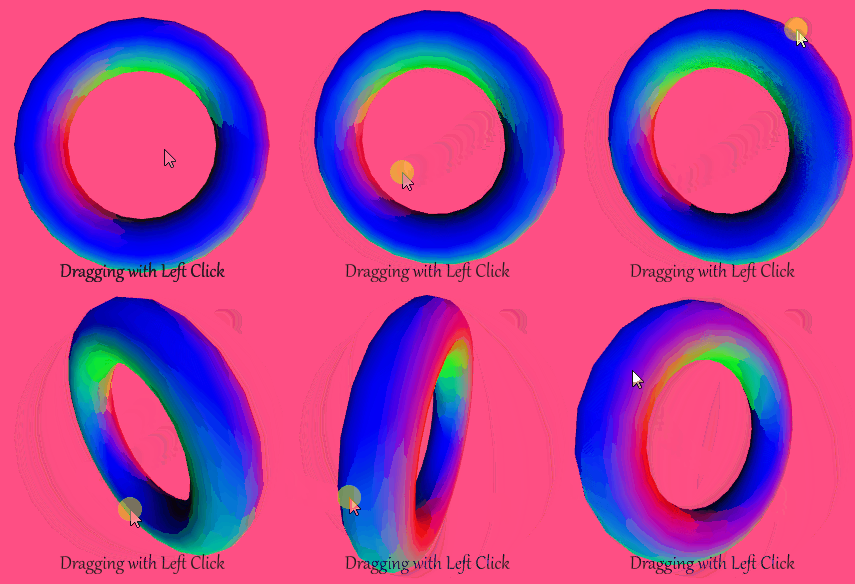
* **Left-clicking** and dragging will **rotate** the camera position **about the center of the canvas** (not necessarily `0, 0, 0`, as you might have moved your camera before)
* **Right-clicking** and dragging will **shift** the camera position without rotation
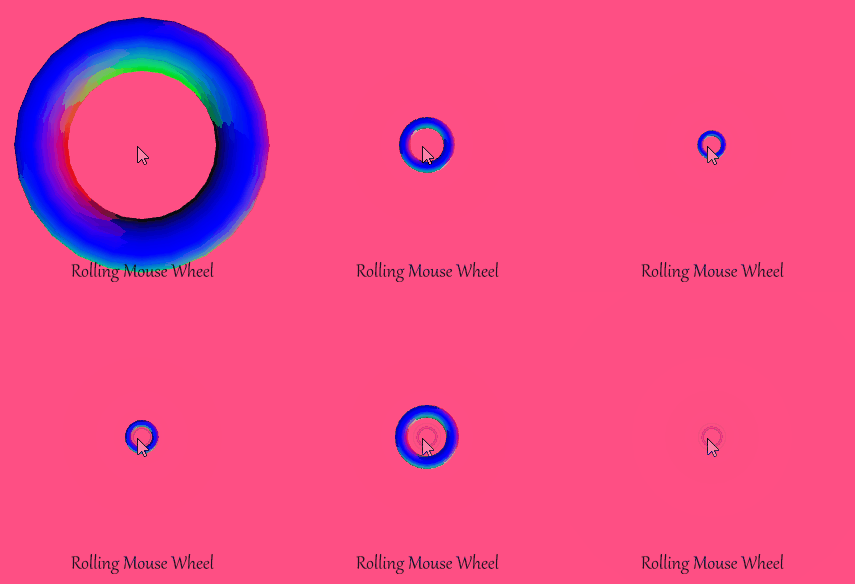
* **Rolling the mouse wheel or the trackpad** (scrolling) will move the camera **closer or further from the center of the canvas.**
This function can be called with parameters dictating sensitivity to mouse movement along the X and Y axes. Calling this function without parameters is equivalent to calling `orbitControl(1,1)`. **To reverse direction of movement** in either axis, enter a negative number for sensitivity.
{% hint style="info" %}
Find these documents helpful? Let the people who made them help your child learn to code at [**Strivemath**](https://www.strivemath.com/)**!**
We'd love to hear your Feedback/Comments [here](https://docs.google.com/forms/d/e/1FAIpQLSeqorBAGTya-YBRI-VFjJxtgQtCz3ucGDI96K96sNyuaGuvdw/viewform?usp=sf_link).
{% endhint %}